Table of Contents
ToggleParenting wisdom trends 2026 reflect a major shift in how families approach raising children. Parents today want practical strategies that work in real life, not theoretical ideals. The coming year brings fresh perspectives on technology use, emotional development, community support, sustainability, and education. These parenting wisdom trends 2026 respond to lessons learned during recent years of social change and technological acceleration. Families are rethinking old assumptions and building new frameworks. This guide covers five key trends shaping how parents will raise kids in the year ahead.
Key Takeaways
- Parenting wisdom trends 2026 emphasize tech-balanced parenting, treating screens as tools while modeling healthy digital boundaries for the whole family.
- Emotional intelligence now outweighs achievement focus, with parents prioritizing empathy, stress management, and failure normalization over trophies and grades.
- Village parenting models are making a comeback through co-ops, multi-generational housing, and neighborhood networks that reduce isolation and build stronger support systems.
- Sustainable family practices like buying secondhand, nature immersion, and consumption conversations help raise eco-conscious kids while saving money.
- Flexible education approaches—including hybrid schooling, microschools, and interest-led learning—allow parents to tailor learning to each child’s unique needs and strengths.
The Rise of Tech-Balanced Parenting
Screen time debates have evolved. Parents in 2026 aren’t asking “how much screen time is okay?” They’re asking better questions: What is my child doing on screens? Who are they connecting with? What skills are they building?
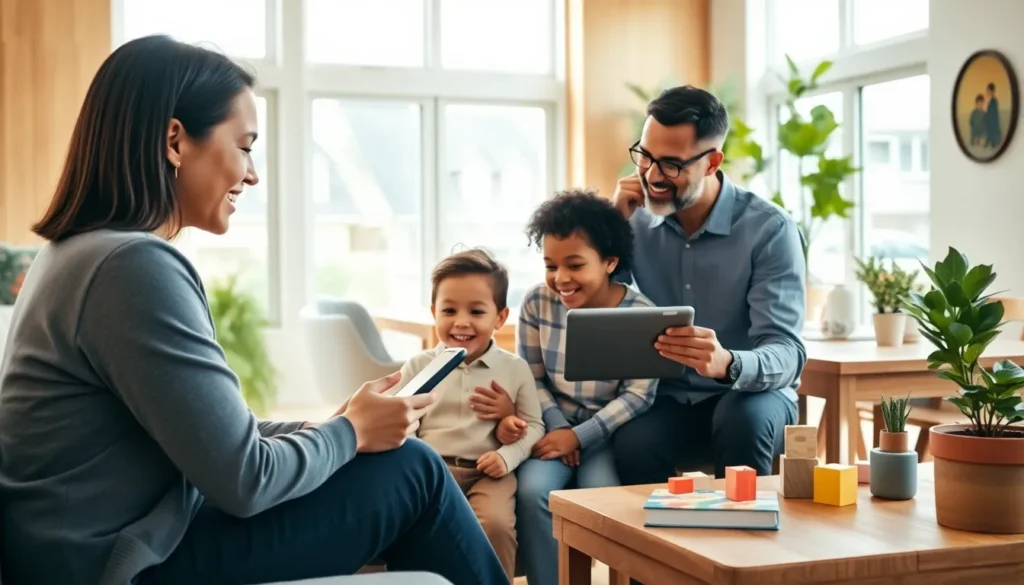
Tech-balanced parenting represents one of the most significant parenting wisdom trends 2026 will bring. This approach treats technology as a tool rather than a villain. Parents set intentional boundaries while teaching kids to use devices productively.
Key practices include:
- Device-free zones: Dinner tables, bedrooms, and cars become screen-free spaces
- Co-viewing habits: Parents watch content alongside children and discuss it afterward
- Digital literacy lessons: Teaching kids to spot misinformation and protect their privacy
- Tech sabbaticals: Regular breaks from all devices for the whole family
Research shows that children learn digital boundaries best when parents model them. A parent who checks email during family movie night sends a mixed message. In 2026, more families will adopt “what’s good for kids is good for adults” rules around technology.
The goal isn’t elimination. It’s balance. Kids need digital skills for their future. They also need unstructured play, face-to-face conversation, and boredom. Tech-balanced parenting gives them all of these.
Prioritizing Emotional Intelligence Over Achievement
The trophy culture is fading. Parents increasingly recognize that emotional intelligence predicts life success better than grades or awards. This shift marks a defining feature of parenting wisdom trends 2026.
Emotional intelligence includes self-awareness, empathy, impulse control, and relationship skills. Children who develop these abilities handle stress better, form stronger friendships, and perform better academically over time.
Parents are adopting new practices:
- Emotion coaching: Naming feelings out loud (“You seem frustrated that your tower fell down”)
- Failure normalization: Treating mistakes as learning opportunities rather than disasters
- Empathy modeling: Showing children how to consider others’ perspectives
- Stress management: Teaching breathing exercises and coping strategies
This doesn’t mean achievement stops mattering. Parents still encourage hard work and celebrate accomplishments. But the emphasis shifts. A child who loses gracefully earns as much praise as one who wins. A student who helps a struggling classmate matters as much as one who aces a test.
Parenting wisdom trends 2026 suggest families will spend less time on competitive activities and more time on connection. Family dinners, one-on-one conversations, and collaborative projects take priority over packed schedules of activities designed to build résumés.
Community-Based and Village Parenting Models
“It takes a village” is becoming more than a saying. Parents in 2026 are actively building support networks that share childcare responsibilities, parenting advice, and emotional support.
Isolation has plagued modern parenting. Nuclear families moved away from extended relatives. Neighborhoods became places people sleep rather than communities. Many parents felt alone with their struggles.
Parenting wisdom trends 2026 show a reversal. Families are creating intentional communities through:
- Parenting co-ops: Groups of families who rotate childcare duties
- Multi-generational housing: Grandparents, parents, and children sharing space or living nearby
- Neighborhood networks: Organized groups that look out for each other’s kids
- Online support communities: Virtual spaces for advice, venting, and encouragement
These village models benefit everyone. Children gain multiple trusted adults. Parents get breaks and fresh perspectives. Older adults find purpose and connection.
The practical benefits add up quickly. Shared carpools reduce stress. Bulk buying saves money. Collective wisdom prevents reinventing the wheel for common problems.
Parents who embrace community-based models report lower stress and higher satisfaction. Their children develop broader social skills by interacting with diverse adults and peers.
Sustainable and Eco-Conscious Family Practices
Environmental awareness shapes parenting decisions in 2026. Families want to raise children who understand their connection to the planet and take responsibility for protecting it.
Sustainable parenting goes beyond recycling. It involves rethinking consumption patterns, food choices, transportation, and how families spend their time.
Parenting wisdom trends 2026 include these eco-conscious practices:
- Secondhand first: Buying used clothes, toys, and gear before purchasing new items
- Nature immersion: Regular outdoor time in parks, forests, and gardens
- Food awareness: Teaching kids where food comes from through gardening or farm visits
- Consumption conversations: Discussing why families choose not to buy certain products
Children raised with environmental awareness develop different values. They question advertising. They appreciate experiences over possessions. They understand cause and effect at a planetary scale.
Parents also save money through sustainable choices. Hand-me-down networks, toy libraries, and clothing swaps reduce expenses while building community connections.
The key is making sustainability feel normal rather than restrictive. Kids who grow up composting and biking don’t see these as sacrifices. They’re just how things work.
Flexible Approaches to Education and Learning
Traditional schooling faces serious questions. Parents in 2026 want educational approaches that match their children’s individual needs, interests, and learning styles.
The pandemic accelerated experimentation. Families discovered that learning happens everywhere, not just in classrooms. This insight persists as a core element of parenting wisdom trends 2026.
Flexible education takes many forms:
- Hybrid schooling: Combining in-person classes with home-based learning days
- Microschools: Small learning communities with 10-15 students and personalized attention
- Interest-led learning: Following children’s curiosities rather than rigid curricula
- Skill-based assessment: Measuring what kids can do rather than what they memorize
Parents also expand their definition of education. A child who spends hours building elaborate structures learns engineering principles. A kid who cooks family dinners develops math, chemistry, and life skills. These activities count.
Parenting wisdom trends 2026 show families becoming more confident advocates. Parents question assignments policies that steal family time. They push back against excessive testing. They demand schools address social-emotional learning alongside academics.
This doesn’t mean abandoning structure. Children need guidance, goals, and accountability. But the rigid one-size-fits-all model is giving way to approaches that treat each child as an individual.